Complete Amazon Drop Shipping Guide | Smart Prep Services

Amazon drop shipping lets sellers offer products on Amazon without maintaining their own warehouse inventory. Success depends on compliant fulfilment, reliable suppliers, profitable product selection, and accurate cost management. Smart Prep Services can help sellers explore suitable preparation and operational support options for their business.
What Is Amazon Drop Shipping and How Does It Work?
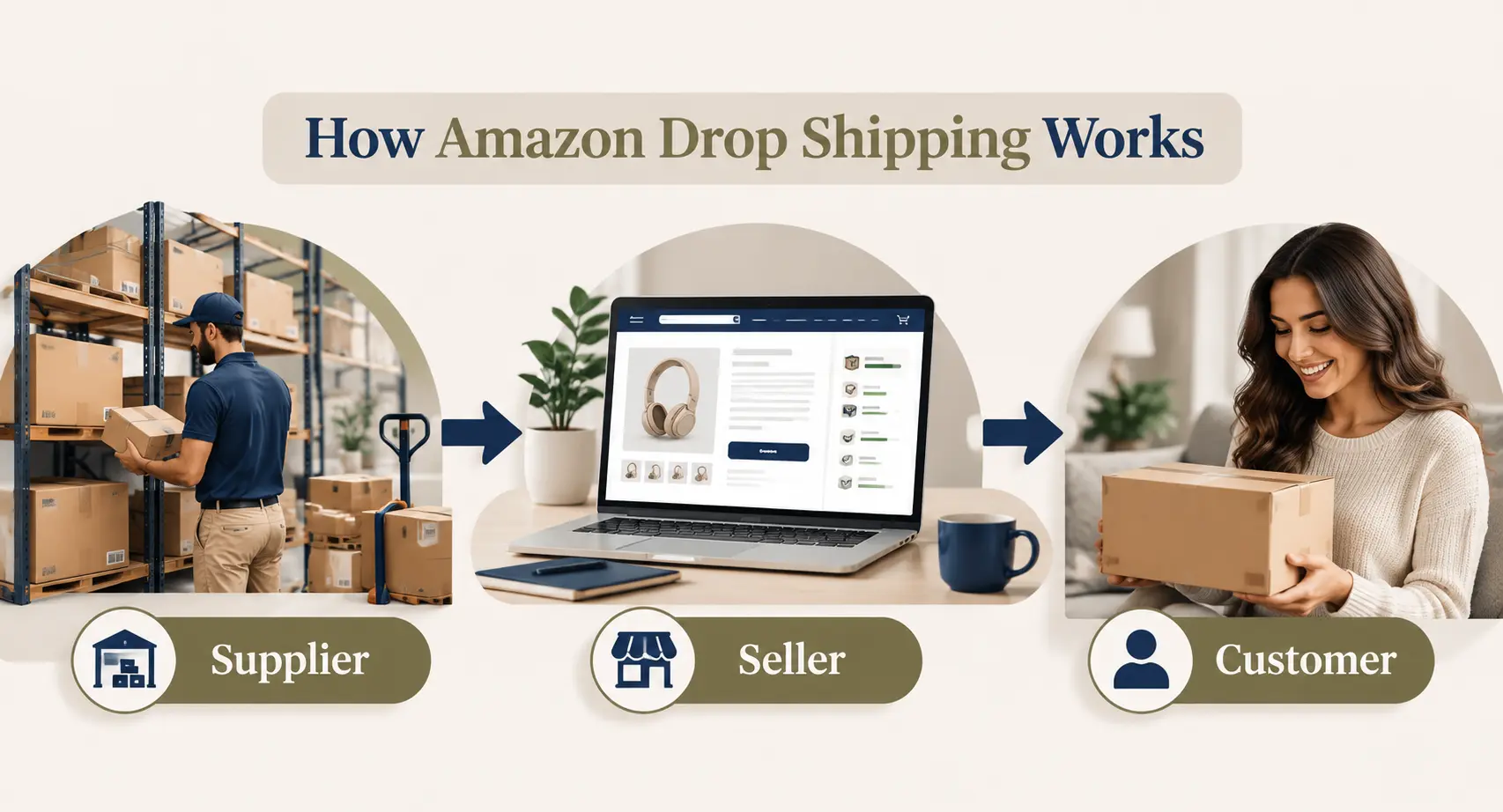
Amazon drop shipping is an ecommerce fulfilment model where sellers coordinate product sales and third-party suppliers help fulfil customer orders. Sellers remain responsible for marketplace compliance, customer satisfaction, returns, and the commercial performance of their business.
Amazon gives independent sellers access to a large customer marketplace, but managing every physical operation yourself can become expensive. The Amazon dropshipping business model offers another route by separating product sales from inventory storage and shipment handling. You focus on selecting products, managing listings, and serving customers while coordinating fulfilment through an appropriate supplier arrangement.
However, less inventory handling doesn’t mean less responsibility. You must understand order fulfilment, supplier reliability, and marketplace compliance before accepting orders. Your supplier may ship products or work with a third-party logistics partner, but you remain accountable for the customer’s experience. A dependable process helps protect both your reputation and your margins.
Amazon Dropshipping vs. FBA vs. FBM
Dropshipping relies on supplier-coordinated fulfilment, Fulfilment by Amazon (FBA) uses Amazon’s fulfilment network, and Fulfilled by Merchant (FBM) leaves fulfilment arrangements under the seller’s responsibility. The right approach depends on your inventory strategy, costs, control requirements, and operational capacity.
Choosing between these models means deciding how much control you want over inventory and delivery. Dropshipping can reduce the need to purchase stock in advance, whereas FBA requires sending inventory into Amazon’s fulfilment network. FBM allows you to manage fulfilment yourself or through an appropriate external provider while remaining responsible for the customer experience.
| Factor | Dropshipping | Amazon FBA | Amazon FBM |
| Inventory approach | Supplier-coordinated supply | Inventory sent to Amazon | Seller-managed inventory or fulfilment arrangement |
| Storage responsibility | Depends on the supplier arrangement | Amazon’s fulfilment network | Seller or chosen provider |
| Fulfilment control | Shared across the agreed workflow | Amazon handles core fulfilment | Seller coordinates fulfilment |
| Cost considerations | Product, marketplace, shipping, and any preparation costs | Product, selling, and applicable FBA fees | Product, selling, shipping, and operating costs |
| Main consideration | Supplier reliability and policy compliance | Inventory investment and FBA economics | Fulfilment control and operational performance |
Compare the complete cost structure before choosing. A model that looks inexpensive initially may become less attractive once shipping, returns, preparation, and marketplace fees are included. Your objective is to select the arrangement that fits your products and supports dependable delivery without sacrificing profitability.
1. Is Amazon Drop Shipping Allowed Under Amazon’s Policies?
Amazon permits dropshipping when sellers comply with its Drop Shipping Policy, including seller-of-record identification and responsibility for customer returns. Sellers must also follow other applicable Amazon policies and relevant legal requirements.
The crucial distinction is between outsourcing fulfilment and allowing another retailer to appear responsible for your sale. Amazon’s official Drop Shipping Policy requires sellers to remain clearly identified as the seller of record. It also addresses third-party identification on packaging and shipment documentation, so supplier arrangements must be checked carefully before launch.
For US sellers, compliance extends beyond Amazon’s rules. Business registration, tax reporting, product-specific requirements, and consumer-protection obligations depend on the circumstances. Pakistan-based operators targeting US customers may need to consider additional obligations in Pakistan when applicable. Verify the requirements relevant to your actual business structure rather than assuming one marketplace account covers everything.
2. How to Start Amazon Drop Shipping Step by Step
Starting an Amazon dropshipping business requires seller registration, product research, reliable supplier arrangements, realistic cost calculations, and a compliant fulfilment workflow. Validate each stage before expanding your catalogue or committing to substantial operating expenses.
The smartest launch begins with a controlled process, not hundreds of product listings. Confirm your seller account is ready, identify products with plausible demand, and verify that suppliers can support your delivery promises. Then calculate the full cost per order, including Amazon fees and any third-party preparation or shipping expenses.
Build the operating process before chasing scale. Decide who confirms inventory, forwards orders, checks packaging, monitors tracking, and manages returns. If you plan to work with Smart Prep Services, discuss your requirements and verify the company’s current service scope, pricing, and operating procedures before incorporating it into your workflow.
3. How to Find Profitable Products for Amazon Drop Shipping
Profitable Amazon dropshipping products combine demand, manageable competition, reliable supply, selling eligibility, and a positive contribution margin. Sellers should validate product performance and fulfilment costs before committing to a listing or expanding their catalogue.
A strong product candidate passes several tests at once. It attracts buyers, remains available through a dependable supplier, and leaves enough room to cover marketplace fees and fulfilment expenses. Product demand analysis should therefore work alongside competitor analysis, pricing history, and product-level profitability rather than operating as a standalone exercise.
Research tools can speed up comparisons across large supplier catalogues, but automated estimates are not guarantees. Check whether the data is current and whether its assumptions fit your selling arrangement. Use the findings to narrow your choices, then verify supplier pricing, stock, eligibility, and expected costs before publishing an offer.
4. How to Choose Reliable Amazon Dropshipping Suppliers
Reliable Amazon dropshipping suppliers offer authentic products, dependable inventory, competitive pricing, clear commercial terms, and fulfilment processes suited to Amazon’s requirements. Supplier verification should happen before you depend on a catalogue for customer orders.
A supplier’s low price means little if products arrive late, stock information is inaccurate, or customer-facing packaging identifies another retailer. Evaluate supplier reliability, product quality assurance, and supplier fulfilment speed together. Your best partner is one that can support the full customer journey, not merely provide an attractive wholesale price.
Start by comparing suppliers against a consistent checklist. Investigate business legitimacy, product sourcing, inventory updates, shipping methods, returns, and response times. Ask specific questions and document the answers. If an offer seems unusually attractive, verify the product’s authenticity, availability, and commercial terms before building your sourcing strategy around it.
5. Amazon Drop Shipping Costs, Fees, and Profit Margins
Amazon dropshipping profitability depends on selling revenue minus supplier costs, marketplace fees, shipping, preparation, returns, and other operating expenses. Accurate unit economics and cash-flow planning help sellers distinguish genuine profit from revenue that disappears into fulfilment costs.
Low inventory requirements can reduce the capital tied up in unsold stock, but they don’t make the business free to operate. You may still need to pay suppliers, purchase software, cover shipping, and manage refunds before your business receives its available proceeds. Amazon dropshipping costs should be calculated using the actual arrangements you plan to use.
Track costs at both the order and business levels. A product may appear profitable individually while subscriptions, administration, or recurring service charges reduce overall returns. Keep records of supplier invoices, marketplace fees, shipping expenses, and refunds. This creates a clearer view of which products and workflows deserve further investment.
6. How to Manage Amazon Listings, Orders, and Inventory Efficiently
Efficient Amazon dropshipping operations rely on accurate listings, current inventory information, timely order processing, reliable tracking, and responsive customer support. Well-defined workflows help sellers reduce errors and manage growth without losing control of fulfilment quality.
Operational efficiency starts with dependable information. A correct listing is of little use if the supplier has discontinued the product or changed its price. Build routines for checking availability, updating offers, reviewing order exceptions, and monitoring delivery performance. These checks connect product research to the daily work that protects your customer experience.
Automation can reduce repetitive work, but it cannot replace sensible controls. Confirm that software uses current information and sends alerts when stock, pricing, or eligibility changes. Keep a clear process for manual review when something looks unusual. Smart Prep Services may fit into the preparation stage when its verified capabilities support the workflow you need.
7. Common Amazon Dropshipping Mistakes and How to Avoid Them
Common Amazon dropshipping mistakes include noncompliant packaging, unreliable suppliers, underestimated costs, restricted product listings, and premature expansion. Sellers can reduce these risks through verification, documented workflows, ongoing monitoring, and realistic financial planning.
Many problems begin with an assumption that seems harmless: a supplier’s packaging must be acceptable, a product must be eligible, or a small margin must be enough. Unfortunately, those assumptions can compound as orders increase. A stronger approach tests the important details before launch and monitors them throughout the life of the product.
Treat compliance, sourcing, and profitability as connected responsibilities. A product isn’t truly attractive if you cannot sell it, ship it reliably, or retain enough profit after expenses. Build checks into your normal workflow rather than relying on memory. Small, repeatable controls are easier to maintain than emergency fixes after problems arise.
Using Suppliers Who Violate Amazon’s Packaging Requirements
Amazon’s dropshipping policy requires the seller to remain clearly identified as the seller of record. Shipment materials that identify an unauthorised third-party seller can violate the policy and put selling privileges at risk.
Don’t assume a supplier understands Amazon’s requirements simply because it serves ecommerce businesses. Explain the seller-identification and packaging rules in writing, then confirm how packing slips, invoices, and external packaging will be handled. Review a test shipment where practical and resolve any third-party identification issues before the arrangement goes live.
Keep evidence of the agreed process and check it when suppliers change their systems or packaging. If a supplier cannot meet the required conditions, reconsider the arrangement rather than hoping customers won’t notice. Your fulfilment process must be compliant in practice, not merely described as compliant in a contract.
Ignoring Hidden Costs and Unrealistic Profit Margins
A product’s selling price doesn’t reveal its true profitability without a complete cost calculation. Supplier charges, marketplace fees, shipping, preparation, refunds, and price changes can quickly eliminate an expected margin.
Calculate every relevant cost before listing a product and revisit the numbers when circumstances change. Include preparation services only when your workflow uses them, but never omit their charges when they apply. Check whether your projected profit survives realistic changes in selling price, shipping, and supplier cost rather than relying on a single optimistic scenario.
Monitor actual results after orders begin arriving. Compare estimated costs with invoices, marketplace fees, and refunds to identify where the calculation differs from reality. If a product repeatedly falls below your target margin, reassess the supplier or price. Discontinuing a weak offer can be smarter than increasing volume on poor economics.
Relying on Unreliable Suppliers or Outdated Inventory Data
Unreliable suppliers can cause cancellations, delayed deliveries, quality complaints, and unexpected costs. Frequent inventory checks, performance reviews, and contingency plans help sellers respond before supply problems affect more customers.
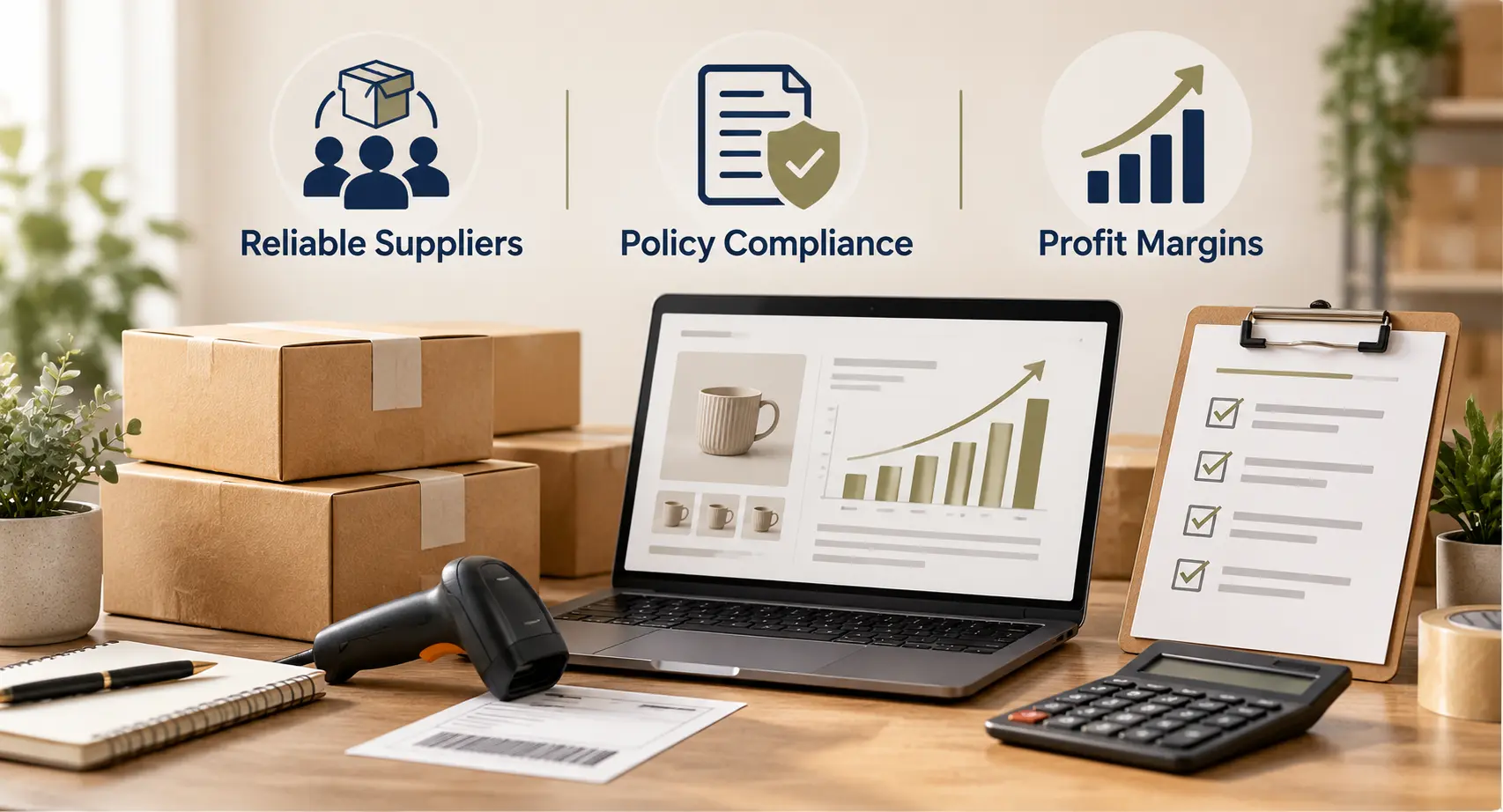
A supplier’s catalogue may show a product that is no longer available, or its dispatch estimates may not reflect actual performance. Verify stock before relying on an offer and establish how quickly changes are communicated. Track delivery reliability and product condition so that you can identify repeated problems rather than treating every incident separately.
Maintain alternatives where practical, but verify those suppliers before switching products or fulfilment arrangements. A replacement source must meet the same quality, eligibility, and packaging requirements as the original. If availability becomes uncertain, update or pause the affected offer and manage outstanding orders according to applicable marketplace rules.
8. Frequently Asked Questions
Is Amazon Drop Shipping Legal in the United States?
Amazon permits dropshipping when sellers follow its applicable policy, including seller-of-record identification and responsibility for customer returns. US sellers must also comply with relevant federal, state, and local requirements.
How Much Money Do You Need to Start Amazon Dropshipping?
Startup capital depends on selling-plan fees, supplier payment terms, product costs, software, shipping, preparation services, and working-capital needs. Dropshipping may reduce inventory investment, but it doesn’t eliminate operating expenses.
Do You Need a Prep Centre for Amazon Dropshipping?
Amazon doesn’t universally require dropshippers to use a prep centre. A preparation partner may be useful when its services address specific packaging, inspection, or fulfilment needs without undermining delivery commitments or profitability.
How Do You Find Reliable Suppliers and Profitable Products?
Find suppliers through verifiable business relationships and assess their authenticity, stock accuracy, product quality, and delivery reliability. Validate demand, competition, account eligibility, and complete costs before listing each product.
How Can You Make Amazon Dropshipping More Profitable?
Improve profitability through better product selection, reliable suppliers, accurate cost tracking, disciplined pricing, and fewer fulfilment errors. Evaluate preparation partners according to their actual costs and operational benefits rather than assuming outsourcing automatically increases profit.
Book a Consultation with Smart Prep Services
A consultation can help Amazon sellers assess whether external preparation support fits their fulfilment workflow, operational needs, and budget. Smart Prep Services can be contacted to discuss requirements and confirm its current service availability, pricing, and processes.
If you’re planning to launch or improve your Amazon dropshipping operation, consider discussing your current workflow with Smart Prep Services. Prepare details about your product types, supplier locations, expected order volume, packaging requirements, and shipping arrangements. These details make it easier to determine whether the company’s available services align with your needs and operating constraints.
Before committing, request clear information about preparation tasks, turnaround times, pricing, additional charges, and responsibility for shipment exceptions. Compare the proposed arrangement with your existing process and calculate its effect on per-order profitability. Use the company’s official contact or booking channel to request a consultation and confirm availability before making operational commitments.
Ready to prep your next FBA shipment?
Request a quote from our Ozone Park, NY prep warehouse. We respond within one business day.