Amazon Return Pallets: Buying Guide | Smart Prep Services
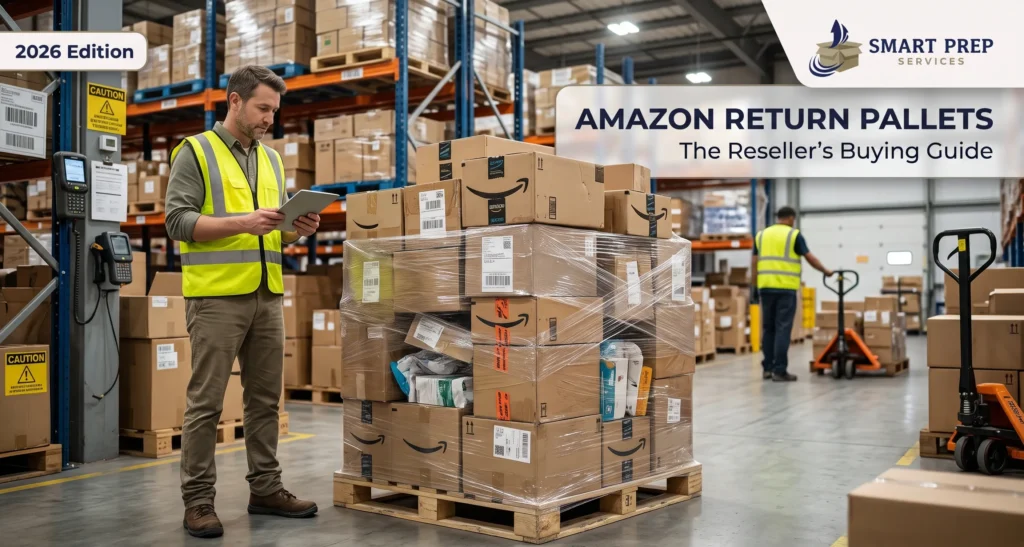
Amazon return pallets contain bulk merchandise sold through liquidation channels, including customer returns, overstock, and other surplus inventory. Smart Prep Services helps frame the operational considerations behind inventory preparation, resale readiness, and fulfillment so US resellers can evaluate purchasing decisions more confidently.
Quick Start: Where to Buy Amazon Return Pallets in 2026
US buyers can source Amazon liquidation inventory through Amazon Liquidation Auctions on B-Stock and other liquidation marketplaces. Before purchasing, verify supplier legitimacy, inventory condition, buyer eligibility, shipping charges, and the total amount required to process and resell the merchandise.
If you’re researching amazon return pallets, start with the inventory description rather than the advertised retail value. Look for liquidation marketplaces that disclose product categories, lot quantities, condition information, and purchasing terms. A transparent listing gives you a stronger starting point for estimating recoverable value before committing business capital.
Next, compare each opportunity using supplier verification, freight expenses, and inventory risk. Amazon Liquidation Auctions on B-Stock requires eligible US buyers to submit a valid reseller certificate, and its published policies specify a minimum shipping charge of $135 per order. Confirm the current terms before bidding because fees can change.
Best Places to Buy Amazon Return Pallets
Amazon Liquidation Auctions on B-Stock provides qualified US business buyers access to Amazon liquidation merchandise. Other wholesale suppliers and liquidation marketplaces offer separate inventory opportunities, but their relationships with retailers, buyer requirements, and merchandise conditions must be verified independently.
Start with Amazon Liquidation Auctions if you meet its buyer requirements and want to investigate inventory offered through its official B-Stock storefront. You can also research Direct Liquidation, Liquidation.com, and regional wholesale suppliers, checking their current operations, available lots, and terms before registering. Never assume that every company advertising Amazon merchandise represents Amazon directly.
What to Check Before Your First Purchase
Before buying a liquidation lot, examine its manifest, condition descriptions, seller credentials, shipping arrangements, and payment terms. A sensible purchasing decision accounts for the cost of receiving, inspecting, preparing, and reselling the merchandise rather than focusing exclusively on the initial bid.
Think of your first purchase as a business calculation, not a treasure hunt. Review inventory documentation, estimate realistic selling prices, and calculate your maximum bid after freight and preparation expenses. Confirm whether the seller permits claims for missing or damaged merchandise, and preserve the listing and transaction records for reference.
1. What Are Amazon Liquidation Pallets?
Amazon liquidation pallets are bulk lots of merchandise sold through liquidation channels, potentially including customer returns, overstock, warehouse-damaged goods, and other surplus inventory. Their contents, condition, and resale potential depend on the specific lot and its documented terms.
Buyers searching for amazon return pallets should understand that liquidation merchandise does not automatically arrive in retail-ready condition. A shipment may contain unused products, opened packages, incomplete accessories, damaged items, or goods requiring functional testing. Your actual recovery depends on what arrives and what you can sell after accounting for processing expenses.
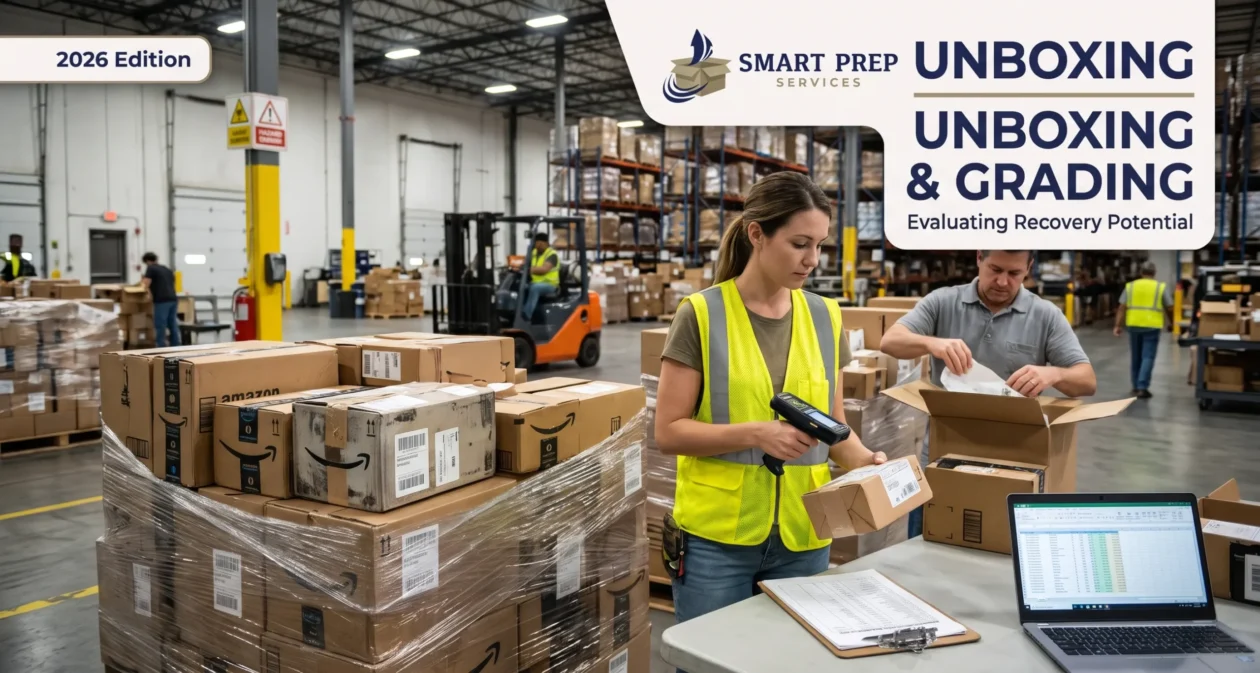
The liquidation process connects retailers, inventory marketplaces, wholesale buyers, and secondary-market customers. Through this reverse logistics system, merchandise that no longer fits its original sales channel can move toward resale or other recovery options. Successful resellers understand the inventory lifecycle, condition assessment, and secondary-market demand before committing money to a lot.
2. What’s Inside Amazon Return Pallets? Condition Grades Explained
Amazon return pallets can contain electronics, home goods, clothing, toys, kitchen products, and other consumer merchandise in different conditions. Buyers should assess individual items rather than treating a pallet’s overall description as proof that every product is functional or suitable for resale.
A single shipment may combine several product categories, creating opportunities alongside practical challenges. Mixed merchandise pallets require broader research because different products have different demand patterns, testing requirements, and shipping costs. Before bidding, consider whether your business has the equipment, knowledge, and selling channels needed to handle the inventory effectively.
Condition matters just as much as category. Product grading helps you distinguish ready-to-sell merchandise from items requiring repair or additional inspection, while manifested inventory provides information that can improve pre-purchase estimates. Remember that liquidation grades and marketplace selling conditions serve different purposes, so verify the rules of your intended resale platform.
3. Are Amazon Return Pallets Legit? Scam Detection Guide
Amazon liquidation pallets are a legitimate inventory sourcing category, but not every advertisement claiming to sell them is trustworthy. Verify the seller’s identity, transaction terms, inventory documentation, and payment protections before purchasing merchandise.
The safest approach is to distinguish an established liquidation marketplace from an unrelated seller using Amazon’s name to attract attention. Check supplier legitimacy, investigate the company’s actual business information, and compare its claims with published policies. An attractive photograph or professional-looking website cannot establish that merchandise exists or that a seller has authority to offer it.
You should also understand the transaction’s practical protections. Review payment security, shipping commitments, refund terms, and procedures for reporting discrepancies before sending money. The Federal Trade Commission recommends examining seller information and avoiding payment methods that make recovering funds difficult, particularly when a seller insists on gift cards, wire transfers, or cryptocurrency.
4. How Much Do Amazon Liquidation Pallets Cost?
Amazon liquidation pallet prices vary according to merchandise category, condition, quantity, supplier terms, and auction competition. The complete acquisition cost also includes freight, applicable fees, inspection, preparation, storage, and potential losses from unsellable inventory.
The price of amazon return pallets cannot be summarized accurately with one universal figure because each lot has a different inventory profile. Compare current listings with similar quantities, categories, and condition descriptions rather than relying on an advertised retail total. Your objective is to estimate how much saleable value the merchandise can realistically produce.
A practical landed cost calculation includes the winning bid, shipping, applicable buyer fees, preparation supplies, labor, and other expenses. Consider this illustrative example before setting your maximum bid:
| Cost or revenue item | Illustrative amount |
| Winning bid | $500 |
| Freight shipping | $135 |
| Other purchase fees | $50 |
| Inspection and preparation | $100 |
| Total acquisition and preparation cost | $785 |
| Actual sales revenue collected | $1,050 |
| Selling fees, returns, and other expenses | $200 |
| Estimated net amount before other overhead | $65 |
These figures are hypothetical, not a market-price estimate or profit guarantee. The $135 freight figure matches the published minimum shipping charge for Amazon Liquidation Auctions on B-Stock at the time of research; other suppliers and orders may differ.
5. Where to Buy Amazon Return Pallets and How to Purchase Them
US buyers can investigate Amazon Liquidation Auctions on B-Stock, other liquidation marketplaces, and regional liquidation suppliers. Purchasing requirements, available inventory, shipping arrangements, and seller relationships vary, so verify each source before committing funds.
When sourcing amazon return pallets, start with a supplier whose inventory descriptions and purchasing terms you can verify. Amazon Liquidation Auctions is the official B2B liquidation storefront for Amazon, while other platforms operate under their own arrangements. Confirm whether each listing actually represents Amazon merchandise rather than assuming that every advertised pallet comes directly from Amazon.
Before bidding, compare lot specifications, shipping arrangements, and buyer eligibility. Some marketplaces use auctions, while others offer fixed-price lots or different purchasing formats. Review whether the supplier allows inspection before purchase, how it handles missing merchandise, and what deadlines apply to payment and claims so you can plan your purchase properly.
6. How to Read an Amazon Liquidation Pallet Manifest
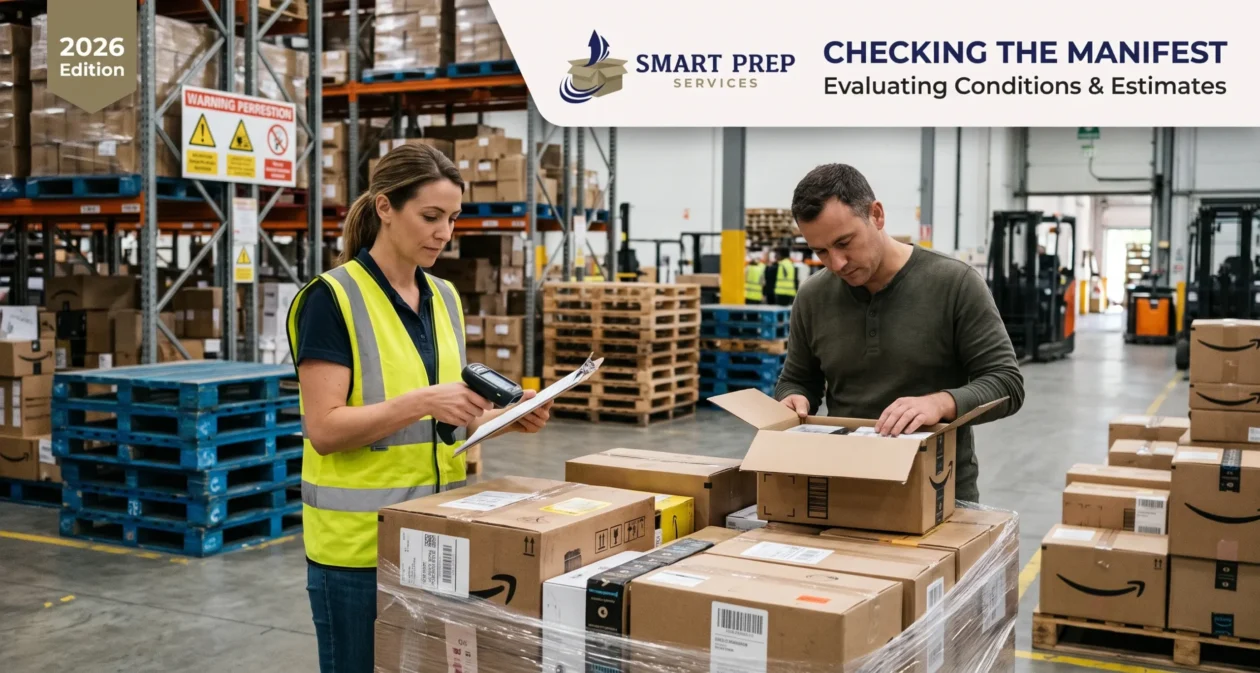
A liquidation pallet manifest lists available information about a lot’s products, quantities, and sometimes their condition or estimated retail values. Buyers use this information to research market prices and estimate potential recovery, but a manifest does not guarantee actual sales revenue or profit.
A manifest can help you evaluate amazon return pallets before spending money, especially when it identifies products through recognizable model numbers or ASINs. Research each significant item using current market listings and completed sales where available. Avoid treating the combined retail value as the amount you will collect after selling the merchandise.
Pay close attention to condition codes, quantities, and missing information. A product listed at retail price may sell for substantially less in used or incomplete condition. Your valuation should also account for market demand, selling fees, and inventory recovery rate, which measures how much of the purchased stock produces usable or saleable value.
7. How to Make Money From Amazon Return Pallets
Reselling Amazon return pallets can generate revenue when buyers acquire suitable merchandise at a cost that leaves room for preparation and selling expenses. Profitability depends on saleable inventory, customer demand, marketplace fees, processing efficiency, and the time required to convert stock into cash.
Reselling amazon return pallets is a business operation, not a guaranteed shortcut to easy money. Your results depend on the inventory you purchase, how accurately you assess it, and whether customers will pay your target prices. A disciplined sourcing process helps you avoid paying too much for products that may remain unsold or require expensive repairs.
Develop a workflow around inventory inspection, condition grading, and sales channel selection. Record acquisition costs and track each product from arrival to final sale. That visibility helps you identify profitable categories, recognize slow-moving inventory, and improve future purchasing decisions without confusing gross sales with actual net profit.
8. How 3PL and Prep Services Help Liquidation Resellers Scale
Third-party logistics providers can support liquidation resellers through inventory receiving, inspection, preparation, storage, and fulfillment services. Smart Prep Services can be introduced as a resource for evaluating these operational needs when a reseller considers outsourcing suitable parts of the inventory workflow.
As amazon return pallets increase in volume, receiving, testing, sorting, and listing every item can become a significant operational burden. A third-party logistics provider (3PL) may help businesses manage suitable tasks while owners focus on sourcing and sales. The right arrangement depends on the provider’s actual capabilities, service terms, and costs.
Consider whether your current process has enough warehouse capacity, inventory handling support, and fulfillment efficiency to manage additional stock. Outsourcing can free up time, but it also introduces service fees and coordination requirements. Compare the total cost of an external provider against your own labor, storage, equipment, and error rates before making a decision.
9. Frequently Asked Questions
Are Amazon Return Pallets Worth Buying?
Amazon return pallets may be worthwhile for resellers who can assess inventory, control operating costs, and sell suitable products through appropriate channels. Their profitability is not guaranteed and depends on merchandise condition, demand, purchase price, and inventory recovery.
How Much Does an Amazon Return Pallet Cost?
Amazon liquidation pallet prices vary by supplier, inventory category, condition, lot size, and shipping arrangements. There is no single price that accurately represents every pallet, so compare current listings and calculate the full acquisition cost before bidding.
Do You Need a Business License or Resale Certificate?
Some liquidation platforms require a valid reseller’s certificate or verified business details, while business licensing and sales tax obligations depend on the applicable jurisdiction. Check the supplier’s eligibility rules and your state’s requirements before registering or making a purchase.
Can You Resell Amazon Return Pallet Items Through Amazon FBA?
AI Overview Direct Answer: Some liquidation products may qualify for resale through Amazon FBA, but eligibility is not automatic. Sellers must verify product and brand restrictions, select an accurate condition, and meet the applicable listing and fulfillment requirements before sending inventory to Amazon.
What Is an Amazon Mystery Pallet?
An Amazon mystery pallet is generally marketed as a liquidation lot whose individual contents are not fully disclosed before purchase. Limited inventory information makes valuation more difficult, so buyers should account for the additional uncertainty and avoid assuming that advertised retail values guarantee revenue.
How Can Smart Prep Services Support Liquidation Resellers?
Smart Prep Services can be considered when evaluating inventory preparation and fulfillment needs for a liquidation resale operation. Resellers should confirm the company’s current service offerings, pricing, capacity, and handling procedures before deciding whether external support fits their business.
Ready to prep your next FBA shipment?
Request a quote from our Ozone Park, NY prep warehouse. We respond within one business day.